Market Report for May 4, 2023

May 4, 2023

The Federal Reserve announced their tenth rate hike in the last year for the federal funds rate as they continue their most aggressive rate hike cycle in 40 years. The hike was an increase of 0.25%, bringing the fed funds rate to a range of 5.00% to 5.25% from a bottom of 0.00% to 0.25%.

The federal funds rate is the rate at which commercial banks borrow and lend their excess reserves to each other overnight. While it is an” overnight” rate, it sets the benchmark for all other interest rates from savings accounts and credit cards to 30 year mortgages.

The markets traditionally look to statements from the Fed chairman for some indications of future monetary policy and how it will affect the markets going forward. Given the Fed action, we think there is little catalyst for the markets to move forward in the near future. The Dow Jones Industrial Average saw a swing this afternoon of more than 350 points, closing down 270 points.

Apple Inc. is the largest publicly traded company in the world and will report their earnings today after the market close.  It is often said that as Apple goes, so goes the market.

After a dismal year for both stocks and bonds in 2022, sentiment among a large number of analysts has been cautious. We agree and to protect your assets in very uncertain times, we have been conservative this year.

We have often discussed the illusion of traditional market measures such as the S&P 500 as a reflection in a wall of mirrors. It can be a rather deceptive proxy for both the markets and your portfolios. A small number of tech companies are driving an ever-increasing share of the US stock market’s gains, prompting us to have concerns about the sustainability of this recent short-term rally.

The S&P 500 has risen 8 percent so far in 2023, but 80 percent of the increase has been driven by just seven companies. Apple and Microsoft have led the way, contributing around 40 percent of the index’s rise. The trend has been growing for several months and while there is always a fear of missing the market, we have remained steadfast in our viewpoint of continued systemic market weakness.

When we consider an out of sync bond market, falling oil prices, slowing economic activity and a potentially increasing banking crisis, we believe that the underlying weakness in the markets is signaling caution.

The debate, or rather lack of debate, at this point over the federal debt limit will cast an increasing pall over the markets.  The debt limit is the total amount of money that the United States government is authorized to borrow to meet its existing legal obligations. Since the modern debt limit was created in 1939, it has been raised almost 100 times. It is a myth that the government defaults on its obligations immediately when the limit is reached, but it is getting close.

The U.S. government has never defaulted on its debt, and we remain certain it will not this time. With that said, Washington politics seems to get scarier every day. We do have a high exposure to U.S. Treasuries which are traditionally considered “risk-free” investments. As we manage through turbulent times, our portfolios have an annualized average of over 5.00% return for investments of less than 30 days maturity. We will continue to evaluate these investments as the timeframe for congressional debt limit negotiations progresses.

As always, please feel free to reach out to us with any questions.  We thank you for the confidence you have placed in Affinity Capital to manage your investments and navigate these times together.

 

By Ashley Cowan July 30, 2026
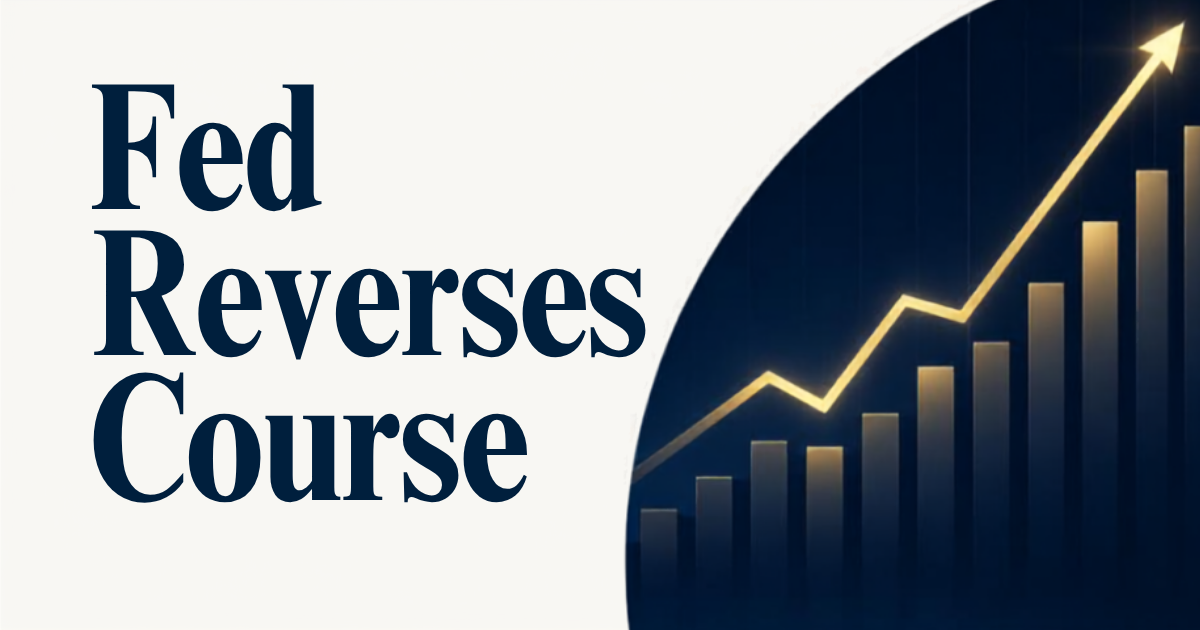
The Federal Reserve concluded its meeting by leaving short-term interest rates unchanged at 3.50% to 3.75%. The decision was widely anticipated and reflects the Fed’s continued effort to balance slowing inflation with an economy that remains remarkably resilient. The economic data released today helps explain that decision. The U.S. economy expanded during the second quarter, although at a more moderate pace than earlier in the year. While the headline growth rate slowed, the underlying picture remains encouraging. Consumer spending continued to be a significant driver of economic activity, businesses are still investing, and the labor market has remained healthy. Much of the slower overall growth appears to reflect temporary factors rather than a broad weakening of the economy. Inflation also continued to move in the right direction. Price pressures have eased considerably from their peak, although inflation remains above the Federal Reserve’s long-term target. That leaves policymakers in a position where they can afford to be patient while continuing to evaluate incoming economic data. Taken together, these developments suggest the economy is transitioning toward a more sustainable pace of growth rather than falling into recession. While risks remain, particularly from geopolitical events, government policy, and persistent inflation in certain sectors, the overall economic backdrop continues to be relatively constructive. For investors, this environment is likely to produce periods of market volatility. Financial markets constantly reassess expectations for interest rates, inflation, corporate earnings, and economic growth. Each new report has the potential to shift those expectations, resulting in short-term market swings. That is why it is important not to overreact to any single Federal Reserve meeting or economic report. History has repeatedly demonstrated that successful investing is built on discipline rather than prediction. Markets will always experience periods of uncertainty, but long-term investment success comes from maintaining a diversified portfolio that is aligned with your financial goals, risk tolerance, and time horizon. While today’s economic reports offer additional insight into where the economy may be headed, they do not change our investment philosophy. We continue to evaluate the broader economic environment, corporate earnings, valuations, and long-term trends rather than focusing on short-term headlines. The economy has slowed from the exceptionally strong pace of the past several years, but it continues to demonstrate resilience. Inflation has improved, interest rates remain restrictive, and the Federal Reserve has the flexibility to respond as new information becomes available. Those are all positive developments for investors seeking a more stable economic environment. As always, we will continue to monitor economic developments carefully and make thoughtful portfolio decisions when warranted. Our focus remains on helping clients achieve their long-term financial objectives, regardless of the latest headlines.
July 9, 2026
Markets navigated a volatile week as escalating tensions between the United States and Iran collided with encouraging domestic economic data and renewed enthusiasm for artificial intelligence-related names. The result was a market that whipsawed day to day but ultimately showed underlying resilience — and one we monitored closely on your behalf throughout the week. Equities: Volatile but Holding Up Major indices experienced sharp intraday swings this week. The Dow Jones Industrial Average fell as much as 1.1% in a single session, dropping over 855 points at its intraday low, while the S&P 500 and Nasdaq Composite showed more mixed results, with the tech-heavy Nasdaq finishing higher on strength in AI-related names. Later in the week, sentiment improved meaningfully as a resurgence in technology companies powered a broader rebound, with the Nasdaq 100 adding roughly 1% and semiconductor stocks climbing around 4%. Chip names whipsawed, having sold off sharply earlier in the week before staging a partial recovery. We continued to track these swings across portfolios throughout the week and saw no cause for reactive changes. Geopolitics Remains the Dominant Wildcard The renewed conflict between the U.S. and Iran was the week's central story, and one we are following closely for downstream portfolio effects. The United States launched fresh airstrikes against Iran, and Tehran responded by targeting Gulf-region interests, following a breakdown of the fragile ceasefire that had been in place. This escalation had an immediate and direct economic effect: energy markets. Crude oil prices spiked sharply, with U.S. benchmark crude rising over 4% and global benchmark crude rising over 5% in a single session, briefly rattling equity markets and lifting energy-sector shares while pressuring more rate-sensitive corners of the market. We noted markets showing a degree of "shock fatigue" as the week progressed, looking past the headlines, though we remain attentive to the possibility of renewed volatility in oil and safe-haven assets should the conflict widen further. The Economic Backdrop Remains Constructive Away from the geopolitical noise, we continue to see an underlying economic picture that supports a "soft landing" narrative. Weekly initial jobless claims came in at 215,000, a six-week low and below economist estimates, reinforcing continued labor market strength. This follows a broader trend we have been tracking: monthly job gains so far in 2026 have averaged roughly 92,000, well above last year's pace, even as wage growth of about 3.5% year-over-year has remained contained rather than accelerating. This combination, steady hiring without runaway wage pressure, is exactly the kind of environment we believe the Fed wants to see as it weighs its next move. On the Fed itself, minutes from the June FOMC meeting showed officials remain divided on the path forward for rates, with inflation data likely to be the deciding factor going forward. Markets currently assign only about a 28% probability to a rate hike at the July meeting, and we are positioning our outlook accordingly, expecting the Fed to largely stay on hold in the near term. What We're Monitoring on Your Behalf Heading into next week, we are closely tracking the June CPI release and Fed Chair testimony scheduled for mid-July, along with the unofficial kickoff of Q2 earnings season as major banks begin reporting. We view corporate earnings as an important test of whether the strong AI-driven capital spending narrative can translate into sustained profit growth, with Wall Street currently projecting Q2 S&P 500 earnings growth in the low-to-mid 20% range, disproportionately driven by AI-related capital expenditure. We will continue to assess how these developments intersect with account positioning and will reach out proactively if we believe adjustments are warranted. Our Perspective Weeks like this are a good reminder that headline-driven volatility and underlying economic fundamentals often tell different stories. While geopolitical developments can create short-term turbulence — particularly through the energy channel — we continue to view the domestic labor market and corporate earnings backdrop as constructive. We remain engaged and continually monitoring client accounts through periods like this, and our focus stays on long-term financial goals rather than reacting to day-to-day headlines. Please don't hesitate to reach out with any questions about how these developments may affect your individual financial plan.
June 25, 2026
Markets continue to navigate a mix of encouraging economic news and ongoing global uncertainty. While investors remain optimistic about the long-term outlook for the economy and corporate earnings, headlines from around the world continue to influence day-to-day trading. One of the biggest factors remains geopolitics. Although tensions in the Middle East have eased somewhat, investors are still watching developments closely because they can affect oil prices, inflation, and ultimately interest rates. Lower oil prices this week have helped calm some inflation concerns, which has been a positive for the broader market. Technology also remains in the spotlight. Strong earnings and continued investment in artificial intelligence have supported parts of the market, although investors are becoming more selective as valuations in some technology companies remain elevated. Looking ahead, markets will continue to focus on inflation data and the Federal Reserve's next steps. If inflation continues to moderate, it could provide support for stocks. However, unexpected developments overseas, changes in energy prices, or shifts in economic data could still create short-term volatility. While short-term market movements can be unsettling, they are a normal part of investing. Rather than reacting to daily headlines, we remain focused on building portfolios designed to weather changing market conditions and help you pursue your long-term financial objectives. Maintaining a disciplined, diversified investment strategy remains one of the most effective ways to navigate uncertainty. As always, if your financial situation or goals have changed, we're here to help ensure your plan continues to align with what matters most to you.