The Fed Raised Rates. What Does It Mean for Your Portfolio — and Your Everyday Life?
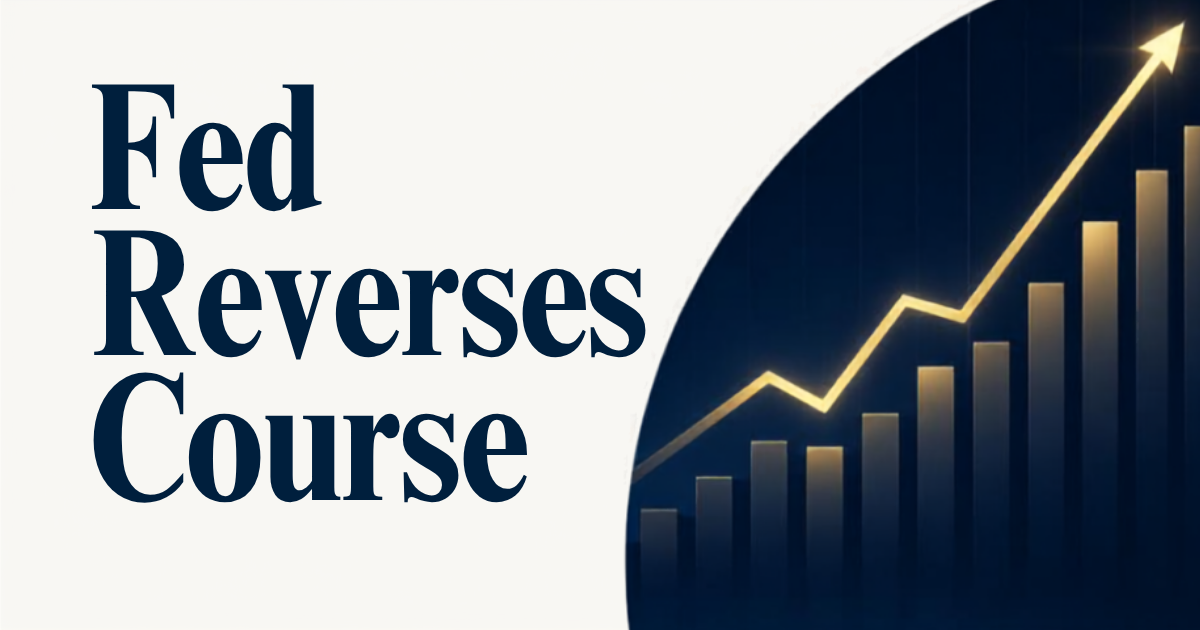
Yesterday, the Federal Reserve raised its benchmark interest rate by one-quarter of a percentage point, bringing the federal funds target range to 3.75%–4.00%. It was the first increase since July 2023, and the vote was unanimous.
For investors, Fed days tend to generate a great deal of commentary about stocks, bonds, and what the central bank might do next. But interest rates affect considerably more than an investment portfolio. They influence the cost of buying a home, financing a business, carrying a credit-card balance, and purchasing a car. They affect what you can earn on cash and short-term investments. And ultimately, the Fed is trying to influence something all of us encounter every day: the prices we pay for goods and services.
Why Did the Fed Raise Rates?
The simple answer is inflation.
The Federal Reserve has a long-term inflation objective of 2%, and inflation remains above that level — the Committee's own projections now put 2026 inflation at 3.7%, with a return to target not expected until 2029. At the same time, the economy has continued to expand at a solid pace, job gains have kept pace with the workforce, and business capital investment has remained robust. Geopolitical developments were also cited as an ongoing source of price pressure.
That combination gave the Fed room to raise rates in an effort to bring inflation under better control. Higher interest rates make money more expensive. Over time, that tends to discourage some borrowing and spending, reduce excess demand, and, ideally, ease pressure on prices.
The important words are "over time." Monetary policy does not work like a light switch. Yesterday's decision does not mean prices fall tomorrow — its effects work gradually through the financial system and the broader economy. Notably, most of the Committee now expects at least one more increase before year-end, suggesting rates stay higher for longer than markets may have hoped.
What Does This Mean for Investors?
For bond investors, higher rates create both challenges and opportunities. Bond prices and interest rates generally move in opposite directions, so a rise in rates can temporarily reduce the market value of existing bonds. But higher yields also mean new bonds can provide more attractive income.
For investors who depend on their portfolios for retirement income, that matters a great deal. For many years, investors had to take considerably more risk to generate meaningful income. Today, high-quality fixed income can once again play the role it was intended to play: providing income, diversification, and greater stability alongside equities.
This is also a reminder that dividend-paying stocks are still stocks. A company may have an excellent history of paying dividends, but its shares remain an equity investment and can decline substantially during a bear market. A high-quality bond represents a contractual obligation to pay interest and return principal, subject to the issuer's ability to meet that obligation. For clients approaching retirement or already taking distributions, that distinction becomes especially important.
As for equities, one Fed meeting should not determine a long-term strategy. Higher rates can create headwinds for stocks — raising corporate borrowing costs and increasing the return available from competing investments like bonds — but interest rates are only one factor among many, alongside corporate earnings, economic growth, and investor expectations. That is why we do not believe successful investing means jumping in and out of the market based on the latest Fed announcement. It means maintaining an appropriate allocation, diversifying risk, and periodically rebalancing — which is precisely what we are doing on your behalf as this environment develops.
The Fed Also Affects Your Life Outside Your Portfolio
This is the part of monetary policy that sometimes gets overlooked.
Credit cards. Many credit-card rates are variable and tied to short-term rates, so carrying a balance becomes even more expensive.
Home equity lines and other variable-rate borrowing. These can also become more costly as short-term rates rise.
Mortgages. Mortgage rates aren't set directly by the Fed — they're driven more by longer-term bond yields and inflation expectations — so they don't necessarily move point-for-point with yesterday's decision.
Auto loans. Financing a vehicle can become more expensive as market rates rise, though the rate any borrower receives also depends on credit quality and lender incentives.
Cash and savings. Here, higher rates can work in your favor. Money-market funds, Treasury bills, CDs, and high-yield savings accounts may continue to offer meaningful yields — though banks don't always pass every increase along to depositors. For families holding substantial cash balances, active cash management should be a deliberate part of your wealth plan, not an afterthought — and it's an area we are actively reviewing across client portfolios this week.
There Is Another Side to the Story: Inflation
No one enjoys higher borrowing costs. But persistent inflation carries its own cost. If a household requires a certain level of income to maintain its lifestyle, inflation gradually increases the amount necessary to sustain that same lifestyle. Over a retirement that may last 20 or 30 years, even modest differences in inflation can meaningfully erode purchasing power. That is part of why the Fed is willing to make borrowing more expensive today — to prevent elevated inflation from becoming entrenched. For our clients, inflation can touch far more than everyday costs — it reaches into travel, insurance, construction, healthcare, and the long-term purchasing power of an estate.
What Should You Do Now?
For most long-term investors, a quarter-point move is not a reason to redesign a financial plan. It's a reason to make sure the plan is still doing what it was designed to do:
Is there enough liquidity for near-term needs? Is excess cash earning a competitive return? Does your fixed-income allocation provide the right combination of income, quality, and maturity? Has market movement caused your portfolio to drift from its intended allocation?
And for those approaching retirement, is enough of the portfolio positioned outside equities so a market decline wouldn't force selling stocks at an unfavorable time?
Those questions matter far more than predicting the Fed's next meeting — and they're the questions we're already working through with clients this week.
The Bigger Picture
Interest rates are the price of money, and the price of money reaches into nearly every corner of our financial lives. Yesterday's decision will be analyzed in terms of basis points and projections. Those things matter. But our job at Affinity Capital is to translate those numbers into something more useful: what does this mean for you?
For some families, higher rates mean better income opportunities in bonds and cash. For others, they mean reviewing variable-rate debt or reconsidering the timing of a major purchase. For retirees, they reinforce the importance of balancing growth with dependable income. And for long-term investors, they're another reminder that diversification and discipline matter more than reacting to a single headline.
The Federal Reserve will continue to respond as conditions evolve. Markets will continue trying to anticipate what comes next. Our approach is different: we build portfolios and financial plans that do not depend on correctly predicting every move the Federal Reserve makes. That is what long-term wealth management is supposed to do.